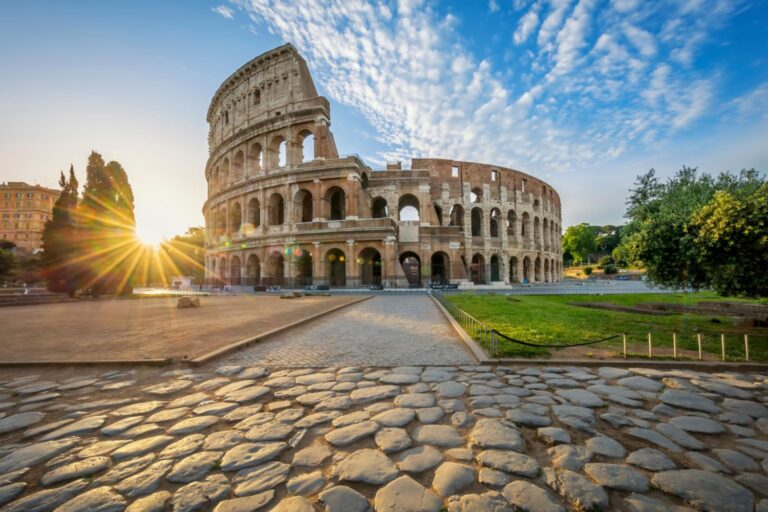
The Colosseum is one of the most recognizable landmarks in the world and an essential stop for anyone traveling to Rome, Italy. Rising above the streets of the Eternal City, this enormous ancient amphitheater has stood for nearly two thousand years as a powerful reminder of the Roman Empire’s ambition, engineering, and dramatic public life.
Originally known as the Flavian Amphitheatre, the Colosseum was completed in the first century A.D. and could hold tens of thousands of spectators. Romans gathered here to watch gladiator contests, theatrical performances, animal hunts, and other large-scale events. Its towering arches, intricate underground chambers, and vast seating areas reveal just how advanced Roman architecture was for its time.
Today, visitors can walk through the same passageways once used by ancient crowds and look down into the arena where gladiators once fought. Beneath the arena floor lies the hypogeum, a network of tunnels and rooms where performers, animals, and equipment were prepared before being lifted into the spectacle above. Seeing these underground spaces offers a fascinating look at the complex planning behind Rome’s grand entertainment.
The Colosseum is especially impressive when viewed from outside at sunrise or sunset, when warm light highlights the weathered stone and dramatic arches. It is also located near the Roman Forum and Palatine Hill, making it easy for travelers to spend an entire day exploring the heart of ancient Rome.
More than a famous photo opportunity, the Colosseum is a place where history feels remarkably close. Standing inside its walls allows visitors to imagine the excitement, noise, and energy that once filled the arena. For travelers seeking to understand Rome’s past, the Colosseum remains an unforgettable symbol of the city’s enduring legacy.
Things to do: Find A Tour For The Colosseum
- Castel Sant’Angelo
- Colosseum
- Pantheon
- Piazza Navona
- Roman Forum
- Spanish Steps
- St. Peter’s Basilica
- Trastevere
- Trevi Fountain
- Vatican City