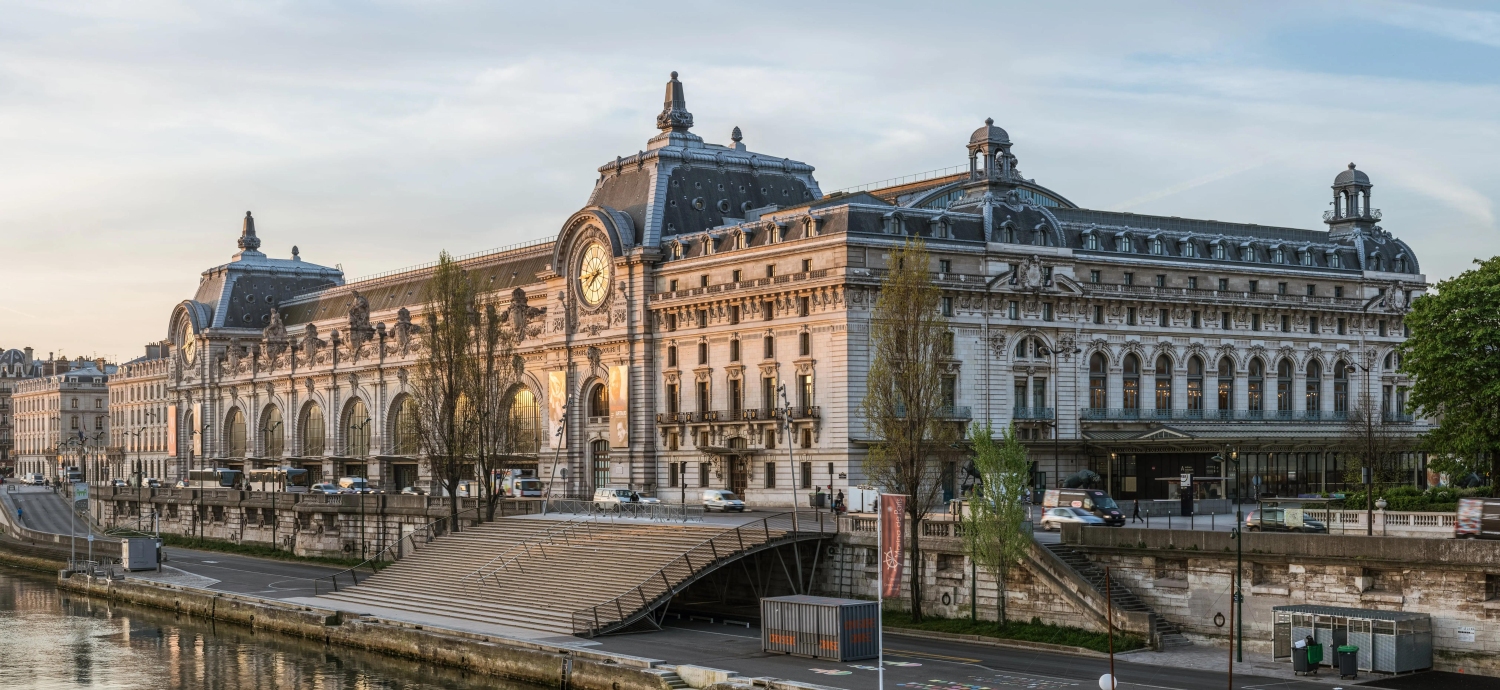
The Musée d’Orsay is one of Paris’s most treasured cultural attractions, offering travelers an unforgettable journey through the art, ideas, and elegance of 19th-century France. Set along the Left Bank of the Seine River, directly across from the Tuileries Garden, the museum is instantly recognizable for its grand Beaux-Arts architecture and magnificent clock windows. Before becoming a museum, the building was the former Gare d’Orsay railway station, constructed for the 1900 Universal Exhibition. Today, the historic setting is as memorable as the artwork displayed inside.
The museum is especially celebrated for its remarkable collection of Impressionist and Post-Impressionist art. Visitors can admire works by Claude Monet, Pierre-Auguste Renoir, Edgar Degas, Paul Cézanne, Vincent van Gogh, and many other influential artists whose paintings transformed the art world. The collection spans the period from 1848 to 1914 and includes paintings, sculptures, photography, decorative arts, and architectural drawings.
For many travelers, the Impressionist galleries are the highlight of a visit. These bright, expressive works capture changing light, lively Parisian streets, peaceful gardens, dancers in motion, and scenes of everyday life. Monet’s landscapes, Degas’s ballet dancers, Renoir’s social scenes, and Van Gogh’s vivid brushwork offer visitors a close look at some of the most recognizable and beloved images in art history.
The building itself adds to the experience. The museum’s central nave, once the grand hall of a railway station, now creates an impressive setting for large-scale sculptures. High glass ceilings fill the space with natural light, while the monumental clock at the far end of the museum has become a favorite viewpoint for visitors looking out across Paris.
Beyond the famous paintings, the Musée d’Orsay offers a deeper look at the cultural changes that shaped France during the late 19th century. Its galleries reveal the rise of modern city life, the changing role of industry, the influence of fashion, and the artistic movements that challenged traditional ideas of beauty and creativity.
Travelers should allow several hours to explore the museum comfortably. Because the collection is extensive, many visitors choose to focus on the Impressionist galleries first before continuing through the sculpture, decorative arts, and photography exhibits. Booking a timed ticket in advance is often helpful, especially during busy travel seasons.
The Musée d’Orsay is also perfectly located for a full day of Paris sightseeing. After a visit, travelers can walk along the Seine, cross toward the Louvre, explore the Tuileries Garden, or continue into the nearby Saint-Germain-des-Prés neighborhood for a café break.
For art lovers, history enthusiasts, and first-time visitors to Paris, the Musée d’Orsay offers a beautiful and inspiring experience. Its combination of world-famous masterpieces, striking architecture, and riverside setting makes it one of the most unforgettable museums in the City of Light.
Things to do: Find A Tour For Musee d’Orsay
- Champs-Elysees and Arc de Triomphe
- Eiffel Tower
- Louvre Museum
- Luxembourg Gardens
- Montmartre and Sacre Coeur
- Moulin Rouge
- Musee d’Orsay
- Notre Dame Cathedral
- Palace of Versailles
- Seine River